

Winning by Design: MEP Essentials for Modern Data Centers
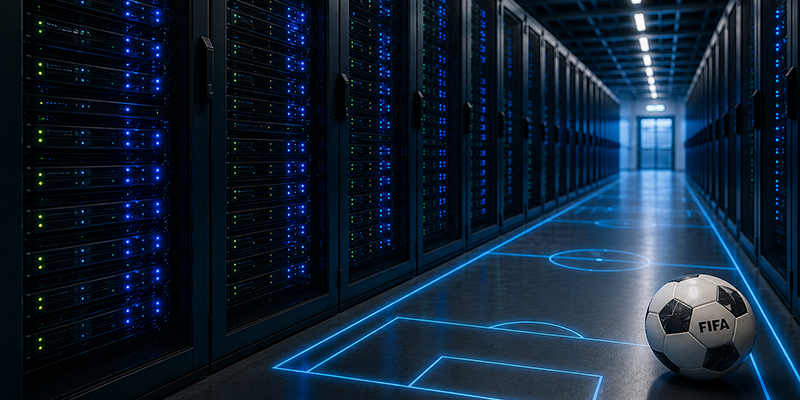
Imagine watching the FIFA World Cup final. The score is level in extra time, millions of fans are watching, and suddenly, the floodlights go out. The stadium screens turn black, broadcasting stops and VAR systems fail.
Unthinkable, isn’t it?
That is precisely how businesses view a data center outage. Every second of downtime can disrupt operations, impact customers and result in significant financial losses. In today’s digital economy, data centers have become mission-critical infrastructure, and just like a championship-winning football team, their success depends on every player performing flawlessly. This is where MEP design in data centres becomes the coach behind the scenes.
Building a Championship Team
No football team wins a tournament by relying on a single superstar. Success comes from having a strong goalkeeper, a dependable defense, creative midfielders and effective forwards working together.
Data centre MEP design is no different.
Electrical systems in data centres provide the power to keep operations running. Mechanical systems maintain ideal temperatures and operating conditions. Plumbing systems support cooling infrastructure and fire protection requirements. Individually, each system plays an important role. Together, they create an environment that delivers reliability and uninterrupted performance.
The Goalkeeper: Reliable Power Supply
In football, the goalkeeper prevents the game from being lost in critical moments. In a data centre, electrical infrastructure plays the same role.
Power availability remains the single most important design consideration for data centre infrastructure. Modern facilities rely on utility feeders, transformers, switchgear, power distribution units (PDUs), uninterruptible power supply (UPS) systems and diesel generators to create resilient electrical networks.
Tier III and Tier IV facilities are designed with data centre redundancy and data centre energy efficiency in mind, often incorporating dual independent power sources and dedicated backup systems. The objective is simple: ensure operations continue even when components fail or maintenance activities take place.
Because in data centres, there are no second chances after the final whistle.
The Defense: Cooling Under Pressure
Every football manager knows that a strong defense wins championships. Similarly, thermal management protects data centres from their biggest opponent: heat.
Servers and networking equipment generate enormous amounts of heat. Without effective data centre cooling solutions, equipment performance deteriorates and failures become increasingly likely.
Modern data centre MEP designs use technologies such as:
Most facilities aim to maintain temperatures between 22°C and 24°C and relative humidity between 40% and 60%. Think of cooling systems as the defensive line that constantly protects the team from conceding an own goal.
The Midfield: Coordination & Distribution
Midfielders control the tempo of a football match. They connect defense with attack and ensure every player receives the ball at the right time.
MEP systems perform a similar function.
Electrical distribution networks, chilled water piping, monitoring systems and control systems work together to ensure that energy, cooling and information flow efficiently throughout the facility. Proper coordination between these systems minimises operational risks, improves energy efficiency and allows facilities to respond effectively to changing demands.
This orchestration is particularly important as data centres continue to increase in scale and complexity.
The VAR System: Early Detection & Protection
Football introduced VAR to detect issues before they become game-changing mistakes.
Data centres require the same level of intelligence.
Advanced fire detection systems, including VESDA (Very Early Smoke Detection Apparatus), continuously sample air quality and identify potential threats long before visible smoke appears.
Plumbing design services in data centres help regular plumbing systems perform successfully, However, unlike conventional buildings, data centres often use clean-agent fire suppression systems, such as Inergens IG 541, 55, Novec 1230 (FK-5-1-12) and FM-200 (HFC-227ea), rather than water-based systems as part of their fire protection design. These extinguish fires quickly while remaining safe for occupants and preventing damage to critical equipment.
The objective is simple: detect problems early and resolve them before they affect operations.
Playing to International Standards
Football teams compete according to globally recognised rules.
Data centres are also designed against internationally accepted standards and frameworks.
The Uptime Institute’s Tier classification system provides guidance on reliability and redundancy requirements. ANSI/TIA-942 offers recommendations for telecommunications infrastructure and facility design. ASHRAE establishes cooling and environmental guidelines, while NFPA 75 provides requirements for fire protection within information technology facilities.
These frameworks help organisations design facilities that achieve the reliability, performance and resilience required in today’s digital environment.
The Fitness Coach: Energy Efficiency & Sustainability
Modern football is increasingly data driven. Teams monitor every sprint, recovery period and movement to improve performance and reduce unnecessary effort.
Modern data centres are becoming equally intelligent.
Power usage effectiveness (PUE) has emerged as one of the most important measures of operational efficiency. Many modern facilities aim for a PUE below 1.5, reflecting a strong emphasis on optimised energy consumption and sustainability in data centres.
Advanced cooling technologies, airflow management strategies and intelligent power systems help reduce energy usage while maintaining high levels of reliability.
After all, winning championships is important, but doing so efficiently is even better.
Preparing for Extra Time
The best football teams are built not only to win today’s match but also to remain competitive for future seasons.
Data centres require the same long-term vision.
MEP design services must consider future expansion requirements, increasing computing demands, site-specific risks, cooling strategies and environmental factors, such as seismic activity. Facilities need flexibility to accommodate new technologies and higher capacity requirements without compromising reliability, since the digital world never stops evolving.
The Final Whistle
A FIFA World Cup victory is never achieved through individual brilliance alone. It is the result of planning, teamwork, preparation and flawless execution.
Modern data centres operate on exactly the same principles.
Reliable power systems, intelligent cooling strategies, coordinated infrastructure, advanced fire protection and efficient energy management all work together to create facilities that can support critical business operations around the clock.
When MEP design is approached strategically, a data centre becomes more than a building filled with servers. It becomes a championship team—resilient, efficient and always prepared for the next challenge.
Axium Global can provide expert modern data centre MEP design and MEP design services for leading global consultants and contractors for data centre infrastructure. Our range of services include expertise in MEP design in data centres, plumbing design services in data centres, MEP design for electrical systems in data centres, fire protection design involving fire suppression systems, creating solutions involving sustainability in data centres, data centre redundancy, 3D BIM models, BIM coordination, MEP design drafting and other BIM applications.