

Engineering Strength: Modern Structural Design for Mixed-use Projects
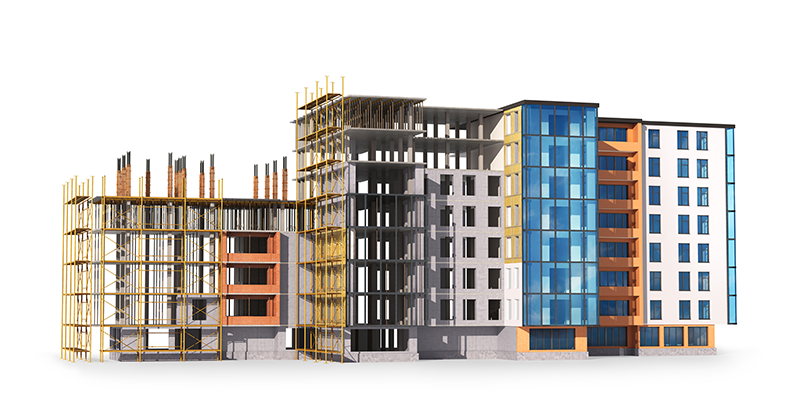
Similar to the human body, which depends on an intricately coordinated system of organs, muscles and nerves to function optimally, mixed-use buildings rely on an equally precise interplay of structural elements, services and spatial planning. Just as imbalance in one physiological system can impact overall health, a gap in structural design, MEP integration or seismic planning can disrupt the performance of an entire mixed-use development design. This parallel underscores a powerful truth: well-engineered environments, much as healthy bodies, require holistic thinking and purposeful structural design and construction.
Designing for Flexibility, Sustainability & Functionality
Designing structures that seamlessly combine residential, commercial and retail spaces has become fundamental to modern urban growth. At the heart of structural design for mixed-use development lies the need to balance flexibility and functionality-ensuring buildings remain adaptable to changing market demands while maintaining structural integrity and structural sustainability across diverse occupancies.
Robust structural systems of commercial mixed-use buildings must accommodate evolving interior layouts, differing load requirements and future reconfigurations. This adaptability preserves long-term economic value and allows spaces to remain relevant without major redesigns.
Sustainable building design also plays a central role. Through responsible material selection, efficient energy systems and thoughtful spatial planning, mixed-use developments can significantly reduce their environmental impact while elevating user comfort.
Elements of Structural Design in Mixed-use Developments
1. Flexible Structural Grids
A well-planned grid allows easy transitions between residential and commercial layouts, enabling future adaptability without major interventions.
2. Efficient Vertical Services
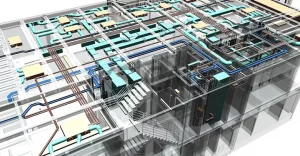
Shafts, risers and ducts must be strategically placed to support multiple uses while minimising design constraints on upper and lower levels.
3. Sustainable Material Choices
Incorporating recycled content, reusing components where feasible and reducing material waste contribute to greener, more cost-effective buildings.
4. Adequate & Smart Parking
Parking remains a major planning challenge in dense cities. Integrating multi-use parking solutions and mobility options enhances convenience and land efficiency.
Complexities of Mixed-use Projects
Mixed-use projects can be horizontal-spanning large sites-or vertical, stacking multiple functions within a single tower. Both forms demand meticulous planning to integrate circulation, access and diverse building systems.
Critical considerations include:
Introducing co-working zones, shared amenities and mobility solutions such as bike stations and EV chargers ensures that mixed-use environments stay dynamic and future-ready.
Innovative Approaches in the Urban Context
Sustainability has become a defining theme in mixed-use structural design. Innovations include:
These strategies reduce energy demand while creating healthier, more engaging urban environments.
Seismic Considerations for Mixed-use Buildings
In seismic zones, mixed-use buildings must meet stringent safety standards due to their complex occupancy patterns and load variations.
Effective seismic structural design includes:
The upcoming 2026 NEHRP cycle aims to refine seismic isolation design, enhance performance targets and address emerging challenges in multi-use developments-strengthening safety across future projects.
Enhancing Community Spaces Through Design
Beyond structural integrity, mixed-use projects thrive on community interaction. Thoughtful planning of shared spaces-lounges, terraces, gardens and atriums-encourages social connection and supports well-being.
Innovative parking solutions, shared mobility hubs and clear transitions between private and public zones further enhance the sense of community while supporting efficient movement within the building.
Structural Design Challenges & Strategies
Mixed-use buildings face several unique technical challenges:
1. Load Diversity – Different occupancies require varying load capacities. Retail floors, for instance, need higher live loads than residential units.
2. Material Requirements – Concrete may suit retail or parking levels, while lighter materials can optimise residential floors for efficiency and comfort.
3. Sound & Vibration Control – Mitigating noise transfer is essential for maintaining residential comfort amid active commercial zones.
4. Integrated, Adaptive Spaces – Modular systems, movable partitions and smart technologies support adaptability and community-oriented design.
Addressing these factors ensures mixed-use buildings remain high-performing and resilient over time.
Structural design for mixed-use developments requires sophisticated coordination, flexible planning, structural drawings, trusted structural design services, precise retaining wall structural design and other structural engineering services, with a strong focus on sustainability and safety. By integrating advanced technologies, optimising MEP systems and embracing future-ready strategies, structural engineering consultants at reputed structural design firms can create vibrant, resilient environments that adapt to evolving community needs.
As cities continue to become increasingly dense and people seek spaces that combine living, working and recreation, mixed-use projects will remain at the forefront of modern urban design-strengthened by meticulous engineering and thoughtful innovation.
Axium Global can provide expert structural engineering services and structural design services for leading global structural engineering consultants and contractors as part of its structural design and construction services. Our range of services include expertise in structural design for mixed-use development, structural drawings, sustainable building design, seismic structural design and retaining wall structural design, creating solutions involving 3D BIM models, BIM coordination, MEP design drafting, architectural BIM modelling and other BIM applications. We also help create digital transformation using AI and automation technologies.