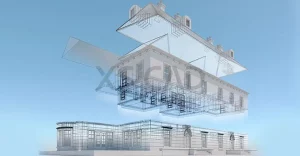
In a world obsessed with sequels-Avengers: Endgame, Top Gun: Maverick, Stranger Things-the idea of a ‘twin’ conjures something familiar yet evolved. Now, imagine if buildings had sequels too-not in bricks and steel, but in data. That’s exactly what digital twins are. And in the race to combat climate change, improve efficiency and manage costs, they might just be the superheroes the built environment has been waiting for.
What Is a Digital Twin?
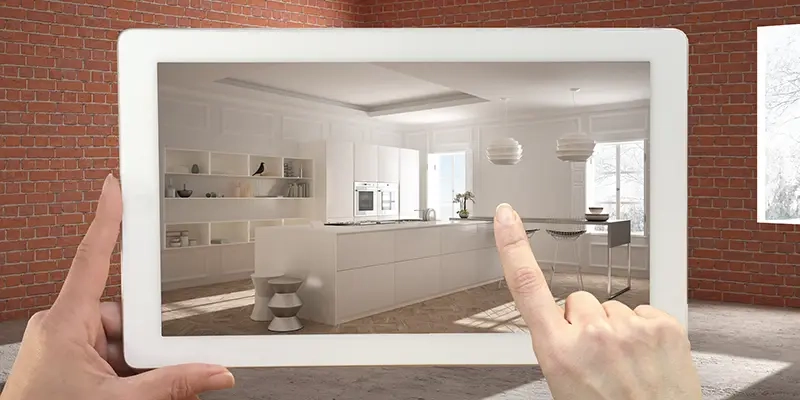
A digital twin is a virtual replica of a real-world object or space that’s synced with the physical world via sensors, IoT devices or smart systems. This connection allows it to receive live data, simulate future scenarios and support predictive decisions. Think of it as the FitBit of buildings-constantly monitoring, analysing and optimising performance in real time.
For buildings, this means a digital version that includes all physical elements-walls, windows, HVAC systems, lighting, elevators, sensors and even the people who interact with them. When integrated into platforms such as Autodesk Tandem, digital twins become intelligent tools that help design, maintain and operate buildings more efficiently.
Working in Tandem
Autodesk Tandem for AEC transforms Revit and BIM data into a comprehensive digital twin. From visualising mechanical systems and measuring design performance post-handover to tagging and tracking assets, Tandem is part of the digital twin software matrix that bridges the gap between design intent and real-world operation. Its key features include:
Parameter Library: Define and import parameters for more accurate digital representations.
Asset Tagging: Link equipment data with O&M manuals, warranties, etc.
Space Management: Visualise rooms and levels and track data trends in real-time.
Live Data Integration: Connect IoT streams for monitoring temperature, humidity, light and energy usage.
The Energy Equation
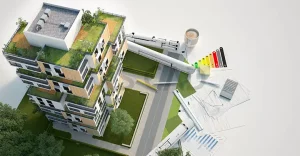
Buildings account for approximately 36% of global emissions, with the majority coming from outdated and inefficient infrastructure. A staggering portion of Europe’s building stock was built before 2001, offering a massive opportunity for sustainable retrofits. Digital twins can address this by:
Monitoring components to identify inefficiencies
Detecting anomalies, such as system malfunctions, before they escalate
Optimising operations through live data analytics
Predicting maintenance needs for proactive repairs
Simulating alternative energy strategies and sustainable energy systems to maximise efficiency
From temperature and lighting automation to integrating solar and geothermal energy, digital twins enable buildings to shift from reactive to intelligent renewable energy systems.
Real-World Wins: Energy Efficiency
Multiple studies and real-life applications have demonstrated the value of digital twins and energy system models in energy savings and operational efficiency:
17% average energy reduction from finer control over lighting, HVAC, electrical systems
38% cost reduction through integration with renewable energy sources and optimised consumption
Over 10% reduction in maintenance costs, thanks to predictive diagnostics
Smarter comfort control, leading to increased tenant satisfaction and better indoor environments
BIM + IoT = A Well-suited Pair
While BIM (Building Information Modelling) provides detailed structural data, it’s largely static. Enter IoT-real-time sensors that capture what’s actually happening inside the building. Together, they offer a complete picture: design + performance. The result? Intelligent building management systems that can self-learn, self-regulate and forecast demand. For instance, smart facades equipped with sensor networks can monitor temperature, humidity and light exposure and transfer this data to digital twins for more effective insulation strategies or trigger cooling systems before occupants feel the heat.
AI, Automation & Beyond
Digital twin technology and virtual energy systems are still evolving. The next frontier lies in integrating AI and machine learning to forecast load behavior, automate control systems and manage energy supply in real time-especially when connected to smart grids and EV infrastructure.
Research suggests that in the future, digital twins for energy systems could operate Energy Operation Centres (EOCs) where managers can monitor and control all building systems centrally, reducing manual oversight and management overhead.
Smart & Strategic
In a climate-conscious world where both carbon footprints and energy bills matter, digital twin technology offers a powerful, actionable solution for environmental sustainability. More than just a digital mirror, digital twins are a decision-making double engine, helping building owners, designers and operators turn insight into impact.
So, while Batman has the Batcave and the Batmobile and Iron Man has Jarvis and the Suit, the buildings of the future have digital twins- a win for energy, the environment and the economy.
Axium Global can provide expert BIM modelling services and 3D CAD design for leading global architects, consultants and contractors. Our range of services include creating 3D BIM models, 3D coordination, MEP design drafting and 2D and 3D design. We also provide design support services by creating 3D visualisation, rendered images, 3D modelling and 3D walk-throughs by using Revit, Dynamo for Revit, 3ds Max, V-Ray, SketchUp, Adobe Photoshop and After Effects, Illustrator and BIM Collaboration Pro for cloud collaboration.