Creating original, interesting and in-depth content consistently on industry-specific topics
Home|Articles| Do Point Cloud Models Still Have a Future?
Do Point Cloud Models Still Have a Future?
20 April 2026
Shalini John
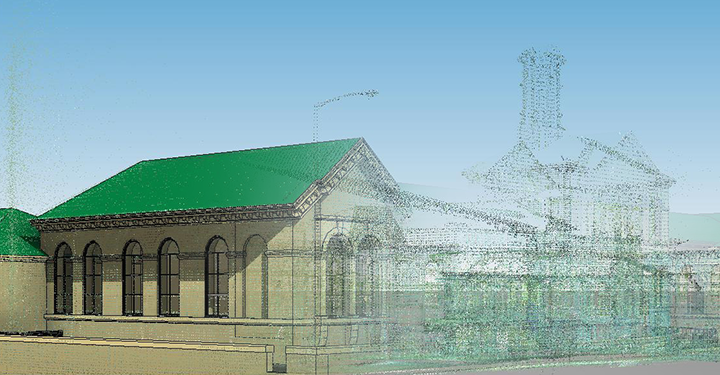
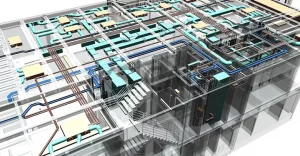
American management consultant, educator and author Peter Drucker once said, ‘The best way to predict the future is to create it.’ Transforming reality into digital precision, point cloud models have great potential, and thus they are creating the future. As a collection of data points in a three-dimensional coordinate system, point clouds consist of points captured from physical objects or environments, providing highly detailed spatial information. These 3D point clouds serve as the foundation for creating accurate 3D models using building information modelling (BIM) in the process of Scan to BIM, making them indispensable for engineering, architecture and virtual reality applications.
Skilled overseas partners can offer unparalleled point cloud modelling services, 3D modelling services, 3D scan to Revit services and create accurate Revit BIM models.
Each point in the cloud represents a precise location in 3D space, often captured using laser scanning technology as a point cloud survey. These scans generate millions-or even billions-of data points, collectively forming a precise digital representation of objects and environments. However, raw point data often requires post-processing techniques such as filtering, denoising and alignment to convert point clouds to MEP models and point clouds to BIM in usable formats for further analysis and modelling.
How Point Cloud Technology Works
Laser scanners emit beams of light that bounce off surfaces and return to the scanner. The scanner measures the time taken for the light to return, allowing it to calculate distances and create a dense collection of 3D data points. This method is widely used for retrofitting and modernisation projects, offering an efficient way to capture as-built conditions with remarkable accuracy.
Real-World Applications of Point Cloud Models
Point cloud technology enables accurate visualisation, modelling and analysis. Here’s how it plays a critical role in various sectors:
Manufacturing: Used for quality control, reverse engineering and digital twin creation to optimise production processes
Energy Sector: Facilitates inspections and maintenance of infrastructure, such as power plants, pipelines and oil rigs, reducing manual effort and enhancing safety
Infrastructure & Construction: Supports planning, construction and maintenance of roads, bridges and utilities, ensuring structural integrity and minimising downtime
Why Point Cloud Models Are a Game-Changer
High Accuracy: Captures precise 3D measurements for reliable data analysis
Time Efficiency: Reduces the need for extensive manual surveying and site visits
Cost Savings: Minimises errors and rework in design and construction phases
Enhanced Visualisation: Provides highly detailed 3D models for better decision-making
Improved Safety: Enables remote inspections, reducing exposure to hazardous environments
Challenges in Handling Point Cloud Data
Despite its advantages, working with point cloud data presents challenges, such as handling large data volumes, noise and incomplete scans. Aligning multiple scans can also be complex. By partnering with an expert in point cloud modelling, companies can streamline workflows and ensure high-quality, accurate 3D models.
Key Benefits of Leica Cyclone
Precise Point Cloud Registration: Aligns multiple scans into a single, unified 3D model
Efficient Data Processing: Cleans and processes large datasets quickly
BIM & CAD Integration: Seamlessly imports data into platforms like Revit and AutoCAD
High-Quality Visualisation: Produces detailed, photorealistic 3D models
Time & Cost Savings: Reduces rework and manual measurement efforts
The Case for Outsourcing Point Cloud Modelling
Outsourcing point cloud modelling or Scan to BIM services provides several advantages, making it a strategic decision for companies looking to maximise efficiency and accuracy:
Faster Project Turnaround: Skilled professionals can process large datasets quickly, reducing project timelines.
High Precision & Expertise: Outsourcing ensures access to experienced specialists who understand data processing nuances.
Cost-Effectiveness: Avoid investment in expensive software and training.
Seamless Collaboration: Facilitate better coordination between designers, engineers and stakeholders.
Scalability: Easily adapt to project size and complexity without burdening internal teams.
Point cloud technology is redefining the way industries capture, analyse and utilise 3D data. With tools such as Leica Cyclone and the efficiency of outsourcing, businesses can unlock the full potential of point clouds, ensuring high accuracy, reduced costs and enhanced project outcomes. Whether for industrial facilities, infrastructure projects or manufacturing, leveraging point cloud models is a step toward smarter, more precise digital transformation, a step towards the future.
Axium Global can provide expert Scan to BIM services and point cloud modelling services for leading global consultants, contractors and developershomebuilders. Our range of services include 3D modelling services, 3D scan to Revit, building information modelling, converting point clouds to MEP models, point clouds to BIM, creating Revit BIM models from point cloud surveys and 3D point clouds. We also provide design support services by creating 3D visualisation, rendered images, 3D modelling and 3D walk-throughs by using Revit, 3ds Max, V-Ray, Adobe Photoshop and After Effects, Illustrator and BIM Collaboration Pro for cloud collaboration.