

Can CFD Analysis for HVAC Solve Complex Building Engineering Challenges in the USA?
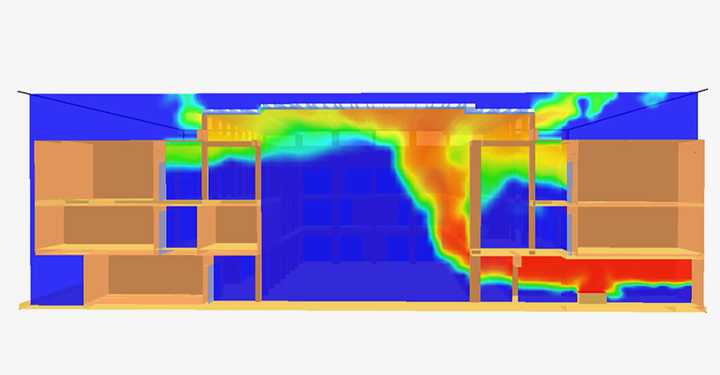
Precision and efficiency are the backbone of modern engineering. Computational Fluid Dynamics (CFD), a cutting-edge simulation tool, is reshaping how engineers predict and visualise fluid dynamics in building environments. Whether optimising HVAC (heating, ventilation, air conditioning) systems, improving thermal comfort or ensuring compliance with stringent U.S. building codes, CFD simulation services is a game-changer. This advanced modelling technique allows engineers to analyse airflow, temperature distribution and heat transfer with unparalleled accuracy-reducing costs and enhancing sustainability.
Optimising HVAC Systems with CFD
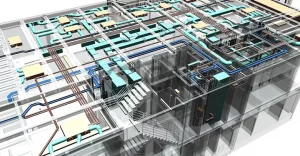
One of the most impactful applications of CFD thermal analysis in the built environment is in HVAC system design. Effective ventilation and temperature regulation are essential in commercial buildings, hospitals and data centres-where climate control directly affects productivity, health and equipment longevity. Traditional trial-and-error approaches can be expensive and inefficient. Incorporating CFD flow analysis, HVAC heat load calculation, thermal load calculation and sustainability design into the design process eliminates this guesswork by offering real-time simulations that help engineers fine-tune system components before installation.
By integrating CFD into HVAC design, engineers can:
CFD in High-Risk Environments
Beyond commercial and residential applications, CFD used for smoke analysis is a crucial tool in high-risk environments where precision climate control is non-negotiable. Industries that rely on CFD modelling include:
The Future of CFD in Sustainable Building Design
As the United States moves toward greener, more energy-efficient building practices, CFD will play an integral role in shaping the future of design and construction. The ability to accurately simulate airflow dynamics enables engineers to:
The use of CFD is a strategic asset for engineers and architects striving to create smarter, healthier and more efficient buildings. By leveraging CFD technology, the industry is better equipped to meet evolving environmental regulations and push the boundaries of sustainable design.
As the U.S. construction industry faces mounting pressures to optimise costs, accelerate project timelines and maintain stringent quality standards, the search for viable offshore partners for Computational Fluid Dynamics (CFD) analysis is gaining momentum. By leveraging global expertise, firms can access specialised skills, advanced technology and scalable solutions that drive efficiency without compromising accuracy. This strategic shift not only enhances project outcomes but also fosters innovation and competitiveness in a rapidly evolving market. As demand for precision-driven solutions grows, offshore collaboration is set to play a pivotal role in reshaping CFD in construction, ensuring sustainable success for forward-thinking firms.
Axium Global can provide expert CFD thermal analysis and CFD simulation services for leading global building engineering consultants. Our range of services include CFD flow analysis, HVAC heat load calculation, thermal load calculation, smoke analysis and sustainablity design services. We also provide design support services by creating 3D visualisation, rendered images, 3D modelling and 3D walk-throughs by using Revit, 3ds Max, V-Ray, Adobe Photoshop and After Effects, Illustrator and BIM Collaboration Pro for cloud collaboration.