Adapting BIM to Business Workflows for Strategic Implementation
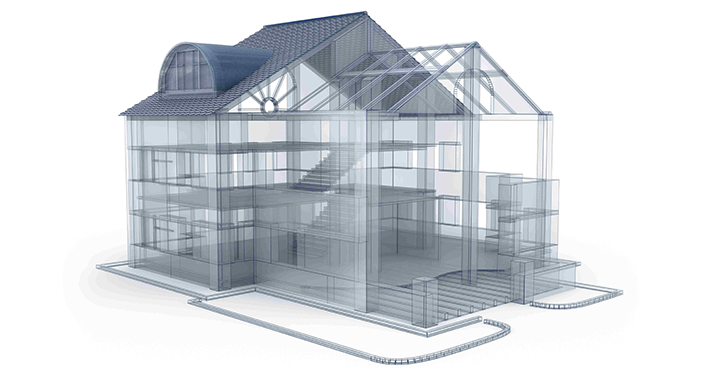
When the Golden Gate Bridge opened in 1937, it was hailed as an engineering marvel-built with precision, vision and collaboration at a scale few thought possible. Nearly a century later, the US construction industry faces a similar challenge: delivering projects that are bigger, smarter and more sustainable than ever before. Just as the Golden Gate symbolized progress for its time, Building Information Modeling (BIM) has become the modern foundation for innovation in architectural and engineering workflows. Backed by federal infrastructure investments and increasing BIM mandates, firms that embrace this digital approach are building more than structures; they are engineering excellence into the future of American construction.
How Digitization Improves Efficiency in BIM Implementation
BIM transforms traditional project workflows into intelligent, data-driven systems. By digitizing internal processes and centralizing information, firms achieve efficiency gains and significant cost savings across personnel, construction and operations.
Driving Sustainability and Safety
The US construction industry is shifting toward sustainable design and Revit analysis, with LEED certification, ASHRAE standards and state-level energy codes shaping project requirements. BIM enables:
Technological Innovations & Emerging Trends
BIM adoption in the US is being supercharged by advanced technologies, such as BIM and AI, and workflow automation tools:
These innovations help US firms win large-scale federal and private contracts while also addressing labor shortages and sustainability targets.
Accelerating Design with BIM Libraries
One of the most effective ways to speed up design time in BIM workflows is through the use of BIM libraries. These cloud-based catalogs act as a designer’s toolbox, containing thousands of real-world construction components that can be directly integrated into a model, as part of BIM application.
By using BIM objects from these libraries, models can be completed without having to create generic elements from scratch-a process that is time-consuming and prone to errors. The result is faster model creation, clearer documentation of required components and improved design accuracy.
While many projects can benefit from standard libraries, some require customized BIM objects-such as energy-efficient systems or products tailored to local building codes and regional suppliers. In such cases, partnering with experienced offshore design specialists can streamline the creation of custom BIM libraries, ensuring that project teams always have the right components at their fingertips while still saving time and resources to bring a concept design to fruition in automated workflow solutions.
A Comprehensive 6-Point BIM Strategy
It is important to understand that BIM is an organizational shift. A clear, phased strategy ensures a successful BIM execution plan and seamless BIM integration.
1. Preliminary Analysis
2. Define the BIM Strategy
3. Training & Skill Development
4. Technological Implementation
5. Monitoring & Evaluation
6. Feedback & Continuous Improvement
Overcoming Common BIM Challenges
Implementing BIM can present hurdles, especially in the early phases:
US firms often mitigate these challenges by partnering with offshore BIM consultants, who leverage their expertise and experience to provide BIM implementation support with BIM coordination, 3D modeling and design development using Revit automation tools while ensuring compliance with US standards.
Evaluating BIM Maturity
Understanding your BIM maturity level is crucial to benchmarking against competitors:
Most leading US firms now aim for Level 2 or higher to remain competitive in bidding for federal or state projects.
Ensuring Data Security During BIM Implementation
With the increasing use of IoT and cloud platforms, data security is a pressing concern in the US market in workflow management automation. Best practices include:
Legal & Contractual Considerations
BIM adoption also raises important legal issues in the US:
Essential Steps Toward BIM Success
To maximize BIM’s potential, US firms should:
BIM as a Competitive Advantage
For US construction and design firms, BIM is more than a technology-it’s a business enabler. While initial investments in training, infrastructure and process change may seem daunting, the long-term benefits in cost savings, quality control, sustainability and client satisfaction far outweigh them.
In an era where efficiency, compliance and sustainability drive market success, BIM adoption positions firms to meet today’s challenges and thrive in the evolving future of US construction.
Axium Global can provide expert BIM execution plans, BIM implementation and BIM integration services for leading global consultants and contractors working towards BIM adoption. Our range of services include 3D modelling and design development, architectural BIM services, electrical design services, 3D BIM services, 3D parametric modelling, BIM coordination, MEP design drafting, architectural BIM modelling and other BIM applications. We also provide design support services for sustainable building systems using MEP BIM software programs, such as Autodesk Advance Steel, Revit MEP, Revit Structure, Dynamo for Revit and 3ds Max, V-Ray, SketchUp, Adobe Photoshop and After Effects, Illustrator while using BIM Collaborate Pro.