

Load, Wind & Wonder: Structural Engineering Challenges of Commercial Towers
Symbolising the ambition and ingenuity of modern engineering, high-rise commercial towers present some of the most complex construction challenges in the built environment. Ensuring structural integrity of a commercial building, optimising wind resistance, managing seismic load issues in commercial buildings and delivering sustainable building design all require precise engineering, advanced digital tools and deep industry expertise. Much as the legendary band Earth, Wind & Fire harmonised distinct musical elements into iconic compositions, modern high-rise design demands the seamless integration of earth-bound foundations, wind-responsive structures and fire-safety systems-each working in perfect rhythm to create buildings that are safe and resilient, reinforcing the structural integrity of a commercial building.
Today, BIM technologies, combined with expert engineering evaluations and precise structural drawings have become essential in solving structural problems in commercial buildings, commercial building structural issues and supporting safe, efficient and sustainable urban development.
Structural Stability and Load Management
One of the most significant challenges in commercial tower design is maintaining structural stability under various load conditions. High-rise structures must safely withstand:
Modern engineering uses reinforced concrete cores, composite steel systems, pre-engineered steel buildings and hybrid framing methods to distribute loads effectively. Through structural load analysis, engineers can model the exact behavior of the building under stress. This prevents excessive material usage while maintaining safety and performance.
When structural performance issues arise—such as structural cracks in walls, deflection problems or uneven settlements—companies rely on commercial building structural inspection and structural damage assessment to identify risks early. Using BIM models, this process becomes more accurate by visualising stress points and potential failure zones before construction ever begins.
Environmental Considerations & Sustainable Structural Design
With growing emphasis on environmental responsibility, high-rise structures and commercial building restoration must meet stringent sustainability criteria. Engineers and architects integrate:
These strategies contribute to sustainable building design and lower operational energy consumption. At this point, BIM technology plays a pivotal role by enabling detailed environmental simulations that predict energy performance and reduce carbon impact.
For restoration or rehabilitation work, especially in older structures, BIM helps identify opportunities for commercial building restoration while ensuring sustainable structural design practices are followed.
Fire Safety & Emergency Evacuation Planning
High-rise buildings require robust systems to manage emergencies effectively. Designs incorporate:
In addition, BIM technology allows designers to embed fire-safety components directly into the 3D model, ensuring full compliance with building codes and seamless integration with other building systems.
Wind Resistance & Seismic Performance
Tall structures face intense lateral forces, especially in dense urban or coastal zones. Ensuring proper wind resistance is vital to avoid excessive sway, discomfort or structural instability. Engineers simulate wind loads with tunnel testing and aerodynamic modelling.
To address seismic load issues in commercial buildings, structures use advanced technologies such as:
These components allow the building to absorb ground motion effectively, minimising damage during an earthquake.
Foundation Engineering & Ground Conditions
High-rise foundations must anchor buildings securely despite soil variability and groundwater challenges. Deep piles, caissons and raft foundations are designed using advanced geotechnical analysis.
BIM tools support:
Thermal Expansion, Material Fatigue & Long-term Durability
Temperature fluctuations can compromise structural materials over time. Engineers must address:
Comprehensive BIM-based simulations help identify stress hotspots and propose reinforcement or material changes early in the design phase.
Ventilation, MEP Coordination & Fire Control Systems
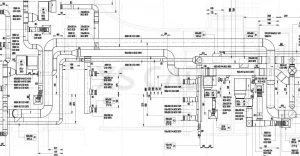
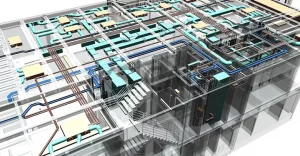
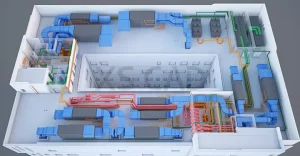
Dense vertical environments make ventilation and MEP integration uniquely challenging. It is important that BIM services ensure perfect coordination between:
This minimises clashes onsite, reduces waste and speeds up construction.
How BIM & Prefabrication Overcome Modern High-Rise Challenges
Building Information Modelling (BIM) has revolutionised engineering design services by enabling multidisciplinary collaboration and precise planning for structural issues in commercial buildings. Key advantages include:
BIM-driven prefabrication further enhances efficiency:
Together, BIM, prefabrication and even pre-engineered steel buildings enable faster, safer and more cost-efficient project delivery.
Addressing Structural Issues in Commercial Buildings
Whether designing a new tower or resolving commercial building structural design issues in existing infrastructure, engineering firms rely on:
Common challenges include:
Through detailed CAD/BIM modelling and engineering expertise, structural problems in commercial buildings can be identified early and resolved efficiently, minimising downtime and cost.
Building the Cities of Tomorrow
The future of high-rise construction lies in innovation. These advancements are transforming how engineers approach complexity:
As cities grow, these technologies will ensure that high-rise commercial structures remain safe, sustainable and resilient.
With the support of expert CAD/BIM services and advanced structural engineering solutions, the construction industry is rising to meet the demands of urban expansion—creating buildings that are efficient, inspiring and built to last.
Axium Global can provide expert commercial building structural design and sustainable building design services for leading global consultants and contractors as part of its engineering design services. Our range of services include expertise in structural drawings, sustainable structural design, structural load analysis, structural damage assessment, a seismic load issue in commercial buildings, creating solutions involving the structural integrity of a commercial building, structural problems in commercial buildings, commercial building structural inspection, commercial building restoration, 3D BIM models, BIM coordination, MEP design drafting, architectural BIM modelling and other BIM applications. We also help create expert engineering evaluations.